A Victorian Cast-Iron Acanthus-Leaf Tripod Table or Stool c1860
Couldn't load pickup availability
Scottish, circa 1860–1880. Probably Charles Young of Edinburgh
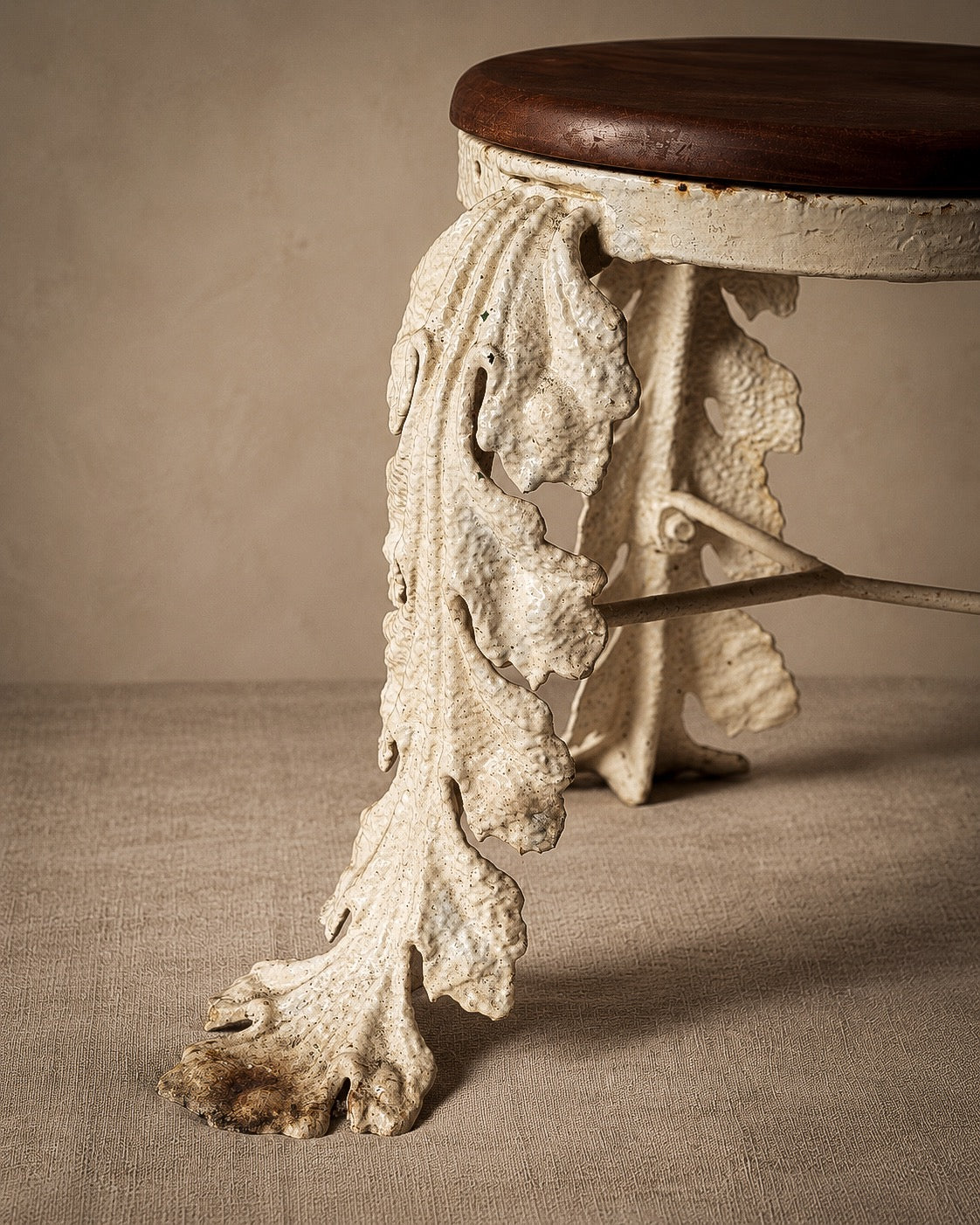
An exceptional example of Victorian ornamental ironwork, the finely cast tripod base formed entirely from exuberant, naturalistically modelled acanthus leaves, each descending from a circular iron frame before sweeping outwards into broad, foliate feet.
The three supports are particularly accomplished in their modelling, with deeply pronounced central ribs, irregularly pierced foliage and richly textured surfaces. The legs are united by a slender tripartite iron stretcher, lending structural stability without interrupting the remarkable sculptural quality of the design.
The form belongs to the great tradition of nineteenth-century British decorative cast-iron furniture, developed for conservatories, garden rooms and the increasingly fashionable Victorian winter garden. Its distinctive splayed acanthus supports invite comparison with the celebrated designs of Charles D. Young of Edinburgh, whose naturalistic garden furniture, introduced during the middle decades of the nineteenth century, became widely admired and subsequently reproduced by other British foundries.
The ironwork retains an attractive, time-worn white-painted surface, with accumulated layers of paint, minor losses and areas of oxidation lending considerable character to the deeply modelled foliage. The later circular hardwood top provides a pleasing contrast to the pale ironwork, allowing the piece to serve as a distinctive occasional or side table.
A particularly decorative example of Victorian naturalistic design, combining the classical language of the acanthus leaf with the expressive possibilities of nineteenth-century iron casting.